Reducing Humanitarian Crisis Response Times by 96% with AI Triage
A case study on Tarjimly’s Spark AI
2025
Tarjimly is the “Uber for Translation”, connecting 60,000+ volunteers with refugees and aid workers. But unlike calling an Uber, our users are often in crisis; medical emergencies, border crossings, or legal disputes.
Role:
Lead Product Designer (AI & Systems)
Timeline:
4 Weeks (Concept to Beta)
Status:
Live (Global Beta)
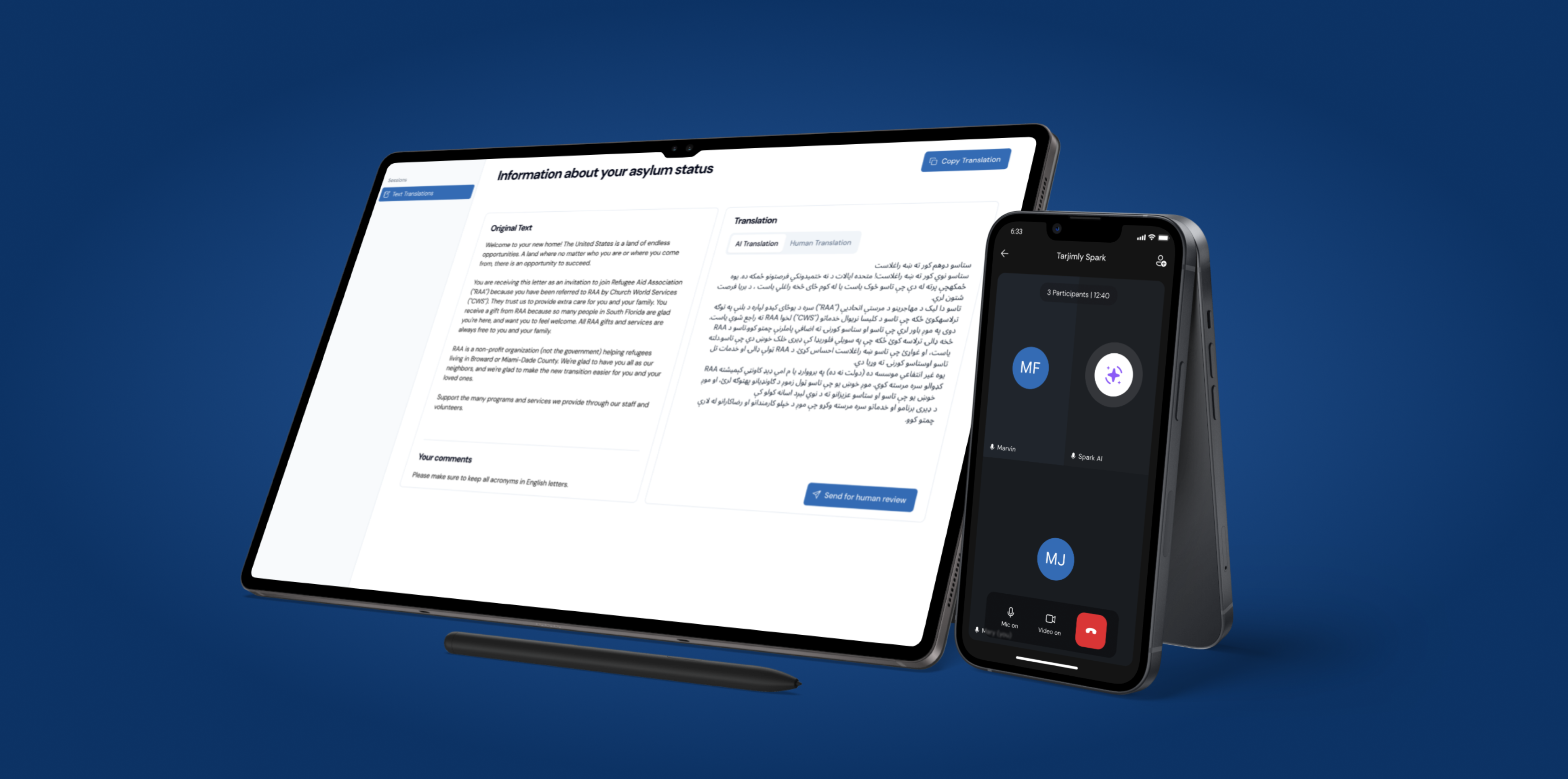
The Business Problem: The “Silence Gap”
In humanitarian aid, speed is a safety metric. Tarjimly relies on a network of 60,000+ volunteers to translate for refugees.
- The Metric: The average connection time for a human translator was 60–90 seconds.
- The Failure: In a crisis (e.g., a medical intake or border crossing), 90 seconds of silence is effectively a service failure. We saw a 25% abandonment rate on short-form requests. Users were leaving before help arrived.
My Role
I led the design of “Spark AI," not as a chatbot replacement, but as an intelligent triage layer to handle the "first mile" of translation.
The Architectural Decision: The “Triage” Model
We analyzed 10,000+ chat logs and found a critical distinction in user intent:
- High-Empathy Needs (60%): "My child is sick, what do I do?" -> Needs Human.
- Transactional Needs (40%): "What does this document say?" -> Needs Speed.
The System Design
Instead of a generic AI assistant, I architected a Binary Triage System:
- Instant Resolve: Spark AI begins transactional and simple conversational queries instantly (<3 seconds), solving the 40% of volume that clogs the queue.
- Seamless Escalation: If the AI detects complexity or distress in the translation/communication, it automatically escalates the session to a human translator or interpreter, passing the full context so the human doesn't start from zero.
The Solution: Spark AI
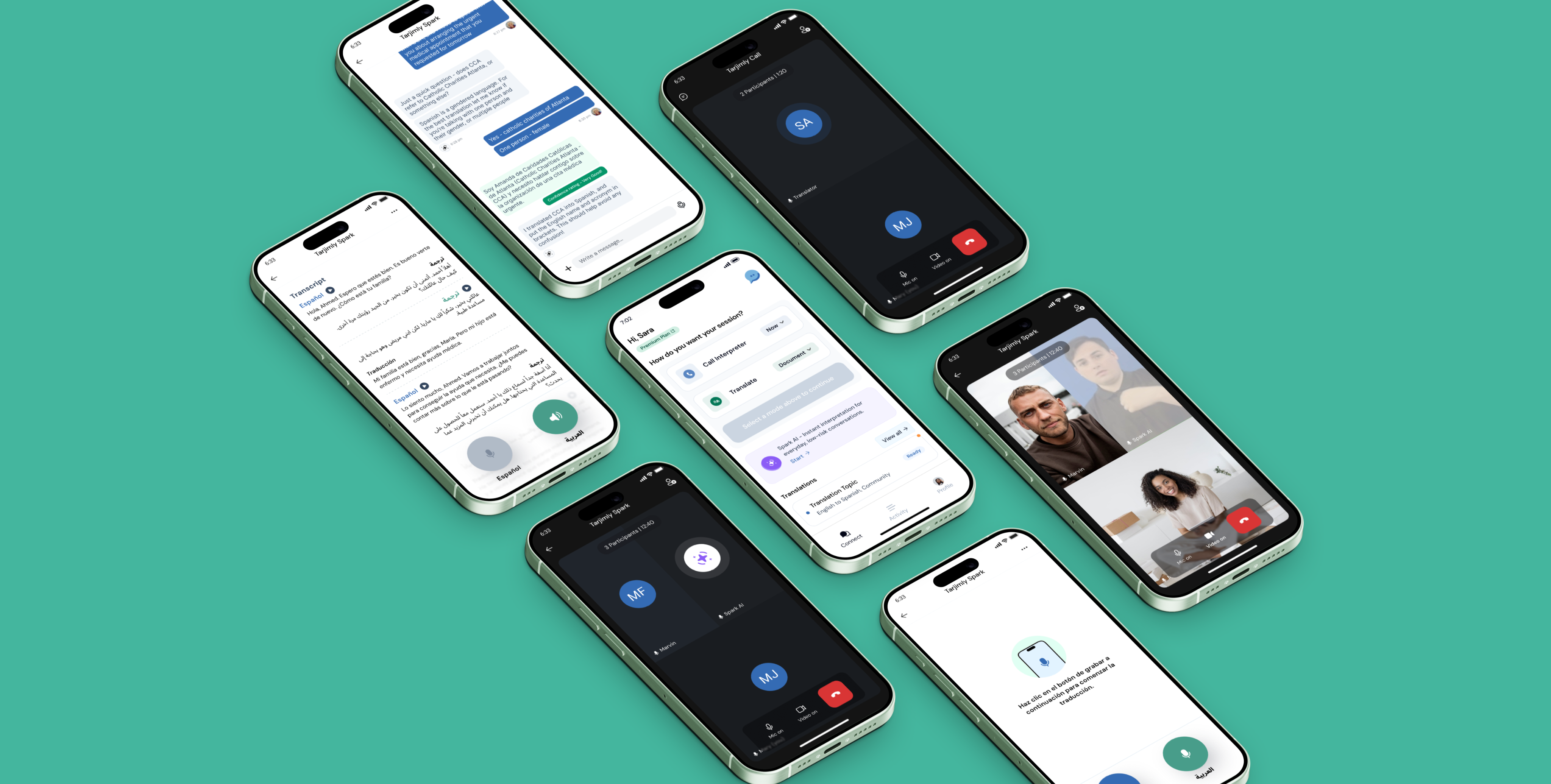
We designed Spark AI, an intelligent triage layer that lives inside the chat. It isn’t a barrier to reaching a human; it’s a bridge.
Feature A: Spark AI Assistant
Think of this as a direct line to a smart helper. It works just like chatting with a friend.
- The Flow: Users open a direct chat with Spark to ask for quick translations, explain cultural differences, or even practice a new language.
- The UX Detail: We designed this for speed. It gives users immediate answers and support without the wait time of connecting to a human volunteer.
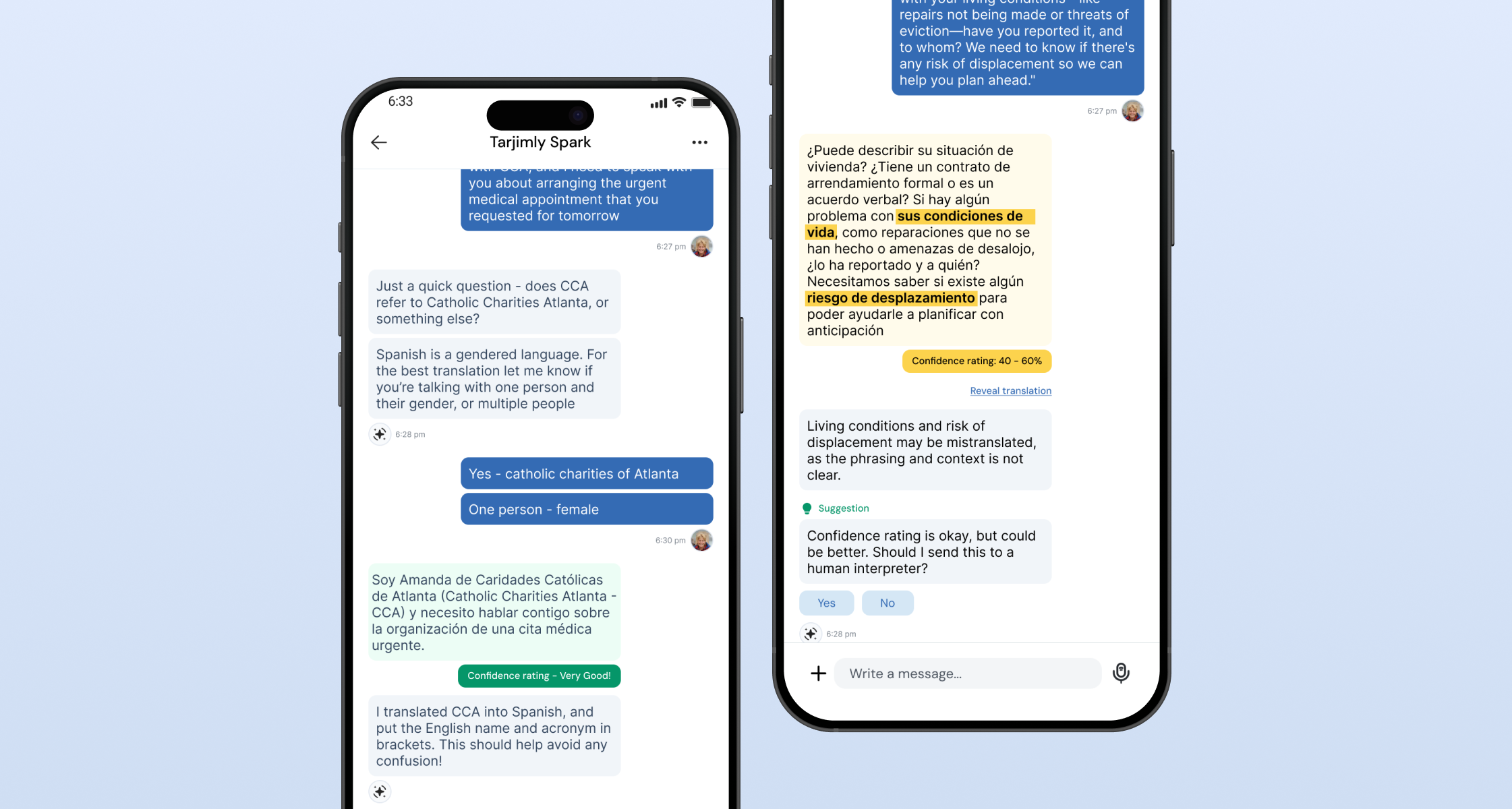
Feature B: In-Person Interpreter Mode
This mode is designed for face-to-face scenarios where two people are in the same room but can't speak the same language.
- The Flow: You place the phone between the speakers. Spark listens to both people and translates their speech out loud in real time.
- The UX Detail: We added a live text transcript that scrolls as you speak. This ensures accessibility and lets users double check the translation instantly to avoid misunderstandings.
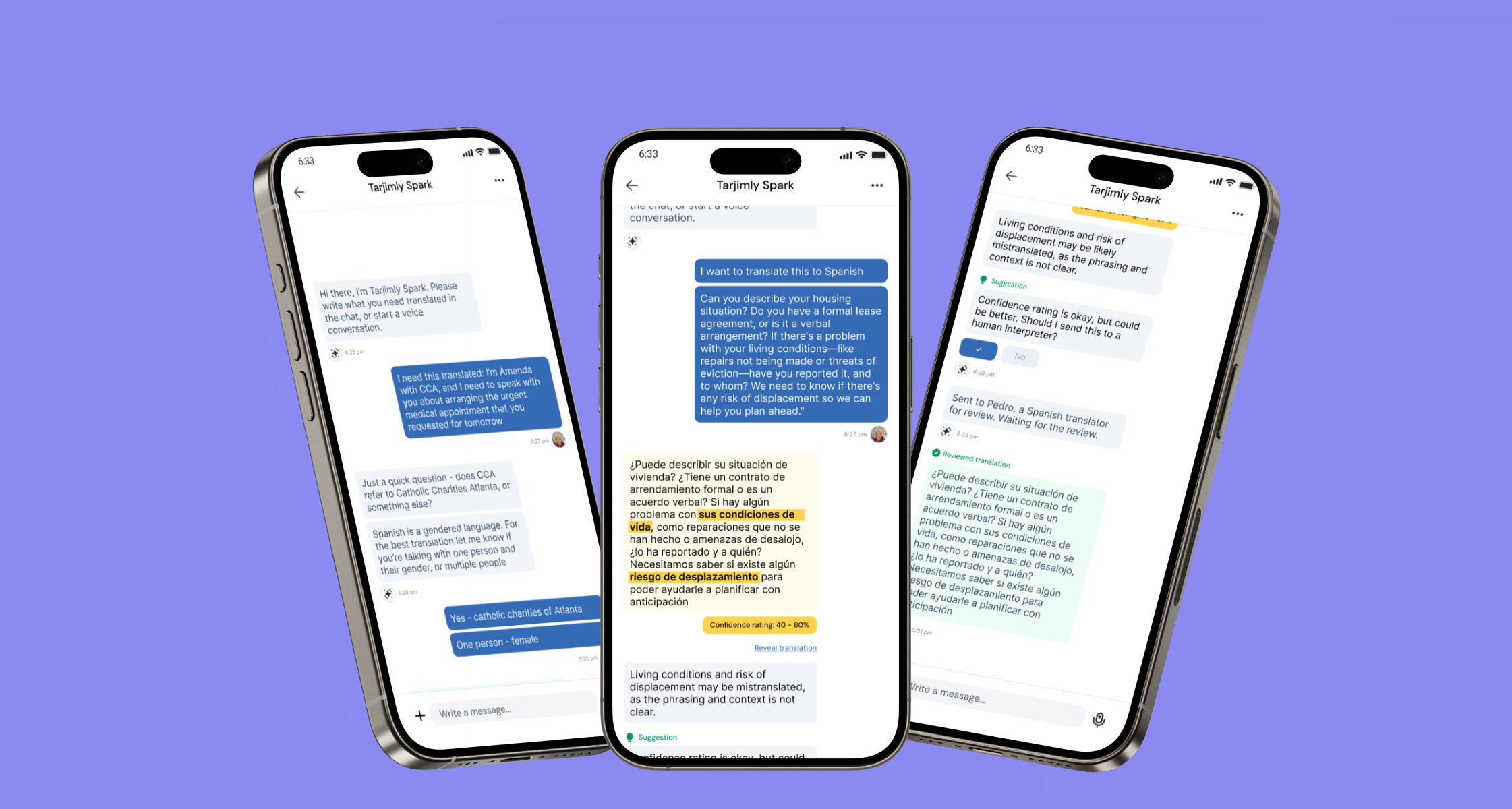
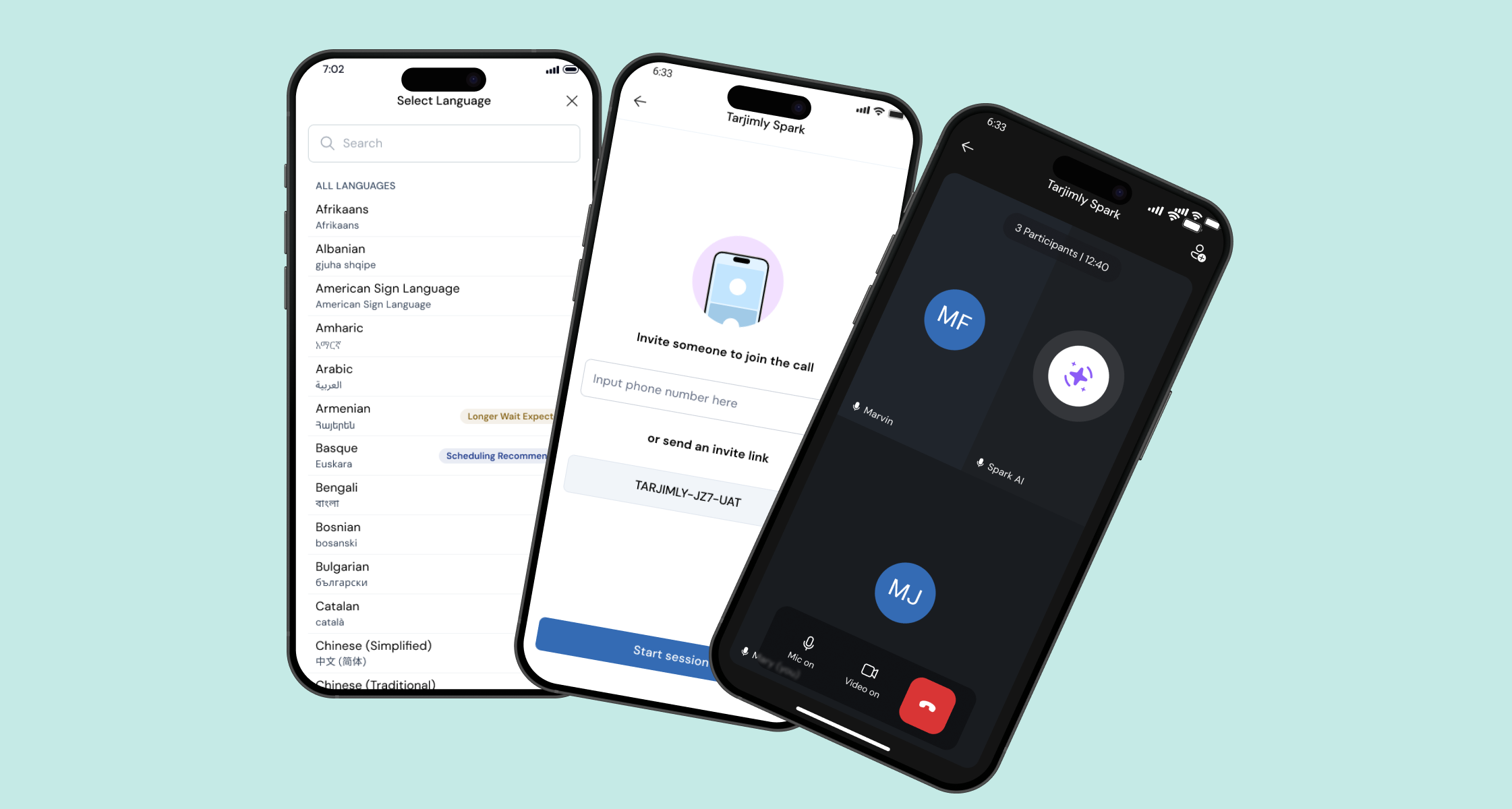
Feature C: Online Conversation Bridge
This is a powerful tool for connecting people who are physically apart.
- The Flow: Speakers of 2 or 3 different languages can join a single online session. Spark acts as the universal translator, instantly converting speech or text so everyone understands the conversation in their own native language.
- The UX Detail: This eliminates the need for multiple interpreters in a group call, making cross-border communication feel fluid and direct.
The UX of Trust: Designing for "Agency," Not "Authority"
AI in a crisis context carries high risk. If the AI is wrong, the consequences are real. I designed specific “Trust Mechanics" to mitigate this:
A. The "Agency" Pattern
- The Decision: Instead of the AI giving one authoritative answer (which risks hallucination) without checks, I designed a confidence rating system, where the AI rates the translation depending on the context or nuance and the user can switch to a human translator if not satisfied with the AI’s translation.
- The Impact: This shifts the user from a passive recipient to an active decision-maker, reducing the risk of blind trust.
B. Latency Masking & "Thinking" States
- The Problem: Instant text generation feels robotic and untrustworthy in a vulnerable moment.
- The Fix: I engineered “soft motion" typing indicators that mimic human pacing. It buys the user psychological safety, feeling like a "thinking partner" rather than a database query.
C. Accessibility First (Non-Latin Typography)
- The Constraint: A lot of our users speak Pashto, Farsi, and Dari.
- The Fix: I audited and implemented a specific font stack optimized for legibility in right-to-left (RTL) scripts, ensuring that complex script characters weren't crushed by standard line heights.
The Impact
We launched a beta to 5,000 active users. The results validated the “Triage" strategy over a pure “Human-Only" model.
Metric
Time to First Response
Abandonment Rate
Volunteer Satisfaction
Before (Human Only)
~90 Seconds
25%
Average
After (Spark AI)
< 3 Seconds
8%
High (Reduced burnout from repetitive tasks)
The Takeaway
Spark AI proved that Human-in-the-Loop is the future of humanitarian design. By offloading the "boring" 40% of work to AI, we didn't replace volunteers—we freed them to focus entirely on the high-empathy, complex work that only a human can do.
Reducing Humanitarian Crisis Response Times by 96% with AI Triage
A case study on Tarjimly’s Spark AI
2025
Tarjimly is the “Uber for Translation”, connecting 60,000+ volunteers with refugees and aid workers. But unlike calling an Uber, our users are often in crisis; medical emergencies, border crossings, or legal disputes.
Role:
Lead Product Designer (AI & Systems)
Timeline:
4 Weeks (Concept to Beta)
Status:
Live (Global Beta)
The Business Problem: The “Silence Gap”
In humanitarian aid, speed is a safety metric. Tarjimly relies on a network of 60,000+ volunteers to translate for refugees.
- The Metric: The average connection time for a human translator was 60–90 seconds.
- The Failure: In a crisis (e.g., a medical intake or border crossing), 90 seconds of silence is effectively a service failure. We saw a 25% abandonment rate on short-form requests. Users were leaving before help arrived.
My Role
I led the design of “Spark AI," not as a chatbot replacement, but as an intelligent triage layer to handle the "first mile" of translation.
The Architectural Decision: The “Triage” Model
We analyzed 10,000+ chat logs and found a critical distinction in user intent:
- High-Empathy Needs (60%): "My child is sick, what do I do?" -> Needs Human.
- Transactional Needs (40%): "What does this document say?" -> Needs Speed.
The System Design
Instead of a generic AI assistant, I architected a Binary Triage System:
- Instant Resolve: Spark AI begins transactional and simple conversational queries instantly (<3 seconds), solving the 40% of volume that clogs the queue.
- Seamless Escalation: If the AI detects complexity or distress in the translation/communication, it automatically escalates the session to a human translator or interpreter, passing the full context so the human doesn't start from zero.
The Solution: Spark AI
We designed Spark AI, an intelligent triage layer that lives inside the chat. It isn’t a barrier to reaching a human; it’s a bridge.
Feature A: Spark AI Assistant
Think of this as a direct line to a smart helper. It works just like chatting with a friend.
- The Flow: Users open a direct chat with Spark to ask for quick translations, explain cultural differences, or even practice a new language.
- The UX Detail: We designed this for speed. It gives users immediate answers and support without the wait time of connecting to a human volunteer.
Feature B: In-Person Interpreter Mode
This mode is designed for face-to-face scenarios where two people are in the same room but can't speak the same language.
- The Flow: You place the phone between the speakers. Spark listens to both people and translates their speech out loud in real time.
- The UX Detail: We added a live text transcript that scrolls as you speak. This ensures accessibility and lets users double check the translation instantly to avoid misunderstandings.
Feature C: Online Conversation Bridge
This is a powerful tool for connecting people who are physically apart.
- The Flow: Speakers of 2 or 3 different languages can join a single online session. Spark acts as the universal translator, instantly converting speech or text so everyone understands the conversation in their own native language.
- The UX Detail: This eliminates the need for multiple interpreters in a group call, making cross-border communication feel fluid and direct.
The UX of Trust: Designing for "Agency," Not "Authority"
AI in a crisis context carries high risk. If the AI is wrong, the consequences are real. I designed specific “Trust Mechanics" to mitigate this:
A. The "Agency" Pattern
- The Decision: Instead of the AI giving one authoritative answer (which risks hallucination) without checks, I designed a confidence rating system, where the AI rates the translation depending on the context or nuance and the user can switch to a human translator if not satisfied with the AI’s translation.
- The Impact: This shifts the user from a passive recipient to an active decision-maker, reducing the risk of blind trust.
B. Latency Masking & "Thinking" States
- The Problem: Instant text generation feels robotic and untrustworthy in a vulnerable moment.
- The Fix: I engineered “soft motion" typing indicators that mimic human pacing. It buys the user psychological safety, feeling like a "thinking partner" rather than a database query.
C. Accessibility First (Non-Latin Typography)
- The Constraint: A lot of our users speak Pashto, Farsi, and Dari.
- The Fix: I audited and implemented a specific font stack optimized for legibility in right-to-left (RTL) scripts, ensuring that complex script characters weren't crushed by standard line heights.
The Impact
We launched a beta to 5,000 active users. The results validated the “Triage" strategy over a pure “Human-Only" model.
Metric
Time to First Response
Abandonment Rate
Volunteer Satisfaction
Before (Human Only)
~90 Seconds
25%
Average
After (Spark AI)
< 3 Seconds
8%
High (Reduced burnout from repetitive tasks)
The Takeaway
Spark AI proved that Human-in-the-Loop is the future of humanitarian design. By offloading the "boring" 40% of work to AI, we didn't replace volunteers—we freed them to focus entirely on the high-empathy, complex work that only a human can do.
Reducing Humanitarian Crisis Response Times by 96% with AI Triage
A case study on Tarjimly’s Spark AI
2025
Tarjimly is the “Uber for Translation”, connecting 60,000+ volunteers with refugees and aid workers. But unlike calling an Uber, our users are often in crisis; medical emergencies, border crossings, or legal disputes.
Role:
Lead Product Designer (AI & Systems)
Timeline:
4 Weeks (Concept to Beta)
Status:
Live (Global Beta)
The Business Problem: The “Silence Gap”
In humanitarian aid, speed is a safety metric. Tarjimly relies on a network of 60,000+ volunteers to translate for refugees.
- The Metric: The average connection time for a human translator was 60–90 seconds.
- The Failure: In a crisis (e.g., a medical intake or border crossing), 90 seconds of silence is effectively a service failure. We saw a 25% abandonment rate on short-form requests. Users were leaving before help arrived.
My Role
I led the design of “Spark AI," not as a chatbot replacement, but as an intelligent triage layer to handle the "first mile" of translation.
The Architectural Decision: The “Triage” Model
We analyzed 10,000+ chat logs and found a critical distinction in user intent:
- High-Empathy Needs (60%): "My child is sick, what do I do?" -> Needs Human.
- Transactional Needs (40%): "What does this document say?" -> Needs Speed.
The System Design
Instead of a generic AI assistant, I architected a Binary Triage System:
- Instant Resolve: Spark AI begins transactional and simple conversational queries instantly (<3 seconds), solving the 40% of volume that clogs the queue.
- Seamless Escalation: If the AI detects complexity or distress in the translation/communication, it automatically escalates the session to a human translator or interpreter, passing the full context so the human doesn't start from zero.
The Solution: Spark AI
We designed Spark AI, an intelligent triage layer that lives inside the chat. It isn’t a barrier to reaching a human; it’s a bridge.
Feature A: Spark AI Assistant
Think of this as a direct line to a smart helper. It works just like chatting with a friend.
- The Flow: Users open a direct chat with Spark to ask for quick translations, explain cultural differences, or even practice a new language.
- The UX Detail: We designed this for speed. It gives users immediate answers and support without the wait time of connecting to a human volunteer.
Feature B: In-Person Interpreter Mode
This mode is designed for face-to-face scenarios where two people are in the same room but can't speak the same language.
- The Flow: You place the phone between the speakers. Spark listens to both people and translates their speech out loud in real time.
- The UX Detail: We added a live text transcript that scrolls as you speak. This ensures accessibility and lets users double check the translation instantly to avoid misunderstandings.
Feature C: Online Conversation Bridge
This is a powerful tool for connecting people who are physically apart.
- The Flow: Speakers of 2 or 3 different languages can join a single online session. Spark acts as the universal translator, instantly converting speech or text so everyone understands the conversation in their own native language.
- The UX Detail: This eliminates the need for multiple interpreters in a group call, making cross-border communication feel fluid and direct.
The UX of Trust: Designing for "Agency," Not "Authority"
AI in a crisis context carries high risk. If the AI is wrong, the consequences are real. I designed specific “Trust Mechanics" to mitigate this:
A. The "Agency" Pattern
- The Decision: Instead of the AI giving one authoritative answer (which risks hallucination) without checks, I designed a confidence rating system, where the AI rates the translation depending on the context or nuance and the user can switch to a human translator if not satisfied with the AI’s translation.
- The Impact: This shifts the user from a passive recipient to an active decision-maker, reducing the risk of blind trust.
B. Latency Masking & "Thinking" States
- The Problem: Instant text generation feels robotic and untrustworthy in a vulnerable moment.
- The Fix: I engineered “soft motion" typing indicators that mimic human pacing. It buys the user psychological safety, feeling like a "thinking partner" rather than a database query.
C. Accessibility First (Non-Latin Typography)
- The Constraint: A lot of our users speak Pashto, Farsi, and Dari.
- The Fix: I audited and implemented a specific font stack optimized for legibility in right-to-left (RTL) scripts, ensuring that complex script characters weren't crushed by standard line heights.
The Impact
We launched a beta to 5,000 active users. The results validated the “Triage" strategy over a pure “Human-Only" model.
Metric
Time to First Response
Abandonment Rate
Volunteer Satisfaction
Before (Human Only)
~90 Seconds
25%
Average
After (Spark AI)
< 3 Seconds
8%
High (Reduced burnout from repetitive tasks)
The Takeaway
Spark AI proved that Human-in-the-Loop is the future of humanitarian design. By offloading the "boring" 40% of work to AI, we didn't replace volunteers—we freed them to focus entirely on the high-empathy, complex work that only a human can do.