Grain Point: Digital Transparency for Local Farmers
Bringing fairness and profit back to the local farmer
2022
Grain Point addresses a critical gap in the agricultural sector, the disconnect between hardworking local farmers and the corporate markets that need their produce. By replacing opaque middleman networks with a transparent digital ecosystem, this project streamlines the difficult journey from harvest to sale, ensuring that the true value of the crop goes directly back to the hands that cultivated it.
Role:
Product Designer
Responsibilities:
User Research, Userflow Design, Wireframing, High-Fidelity Design, Prototyping.
Goal:
To create a seamless ecosystem (Mobile Apps, Website, Dashboard) that assists farmers in selling quality grains directly to large corporations.
Overview
The Story
For many local farmers, harvest season brings as much anxiety as it does relief. Despite their hard work, they often find themselves at the mercy of a disjointed supply chain, relying on middlemen who obscure prices and erode their hard-earned profits. They produce the grain that feeds the nation, yet they often struggle to make a fair living because they lack direct access to the big corporate buyers (off-takers).
The Mission
I joined the team to build Grain Point, a platform designed to fix this broken link. Our goal was simple but ambitious: cut out the middlemen and give farmers a direct, transparent pipeline to sell their crops to major corporations.
The Process & Ideation
Designing for Reality
To make this work, I couldn't design in a vacuum. I had to understand the chaotic reality of a grain outlet. The people using this software aren't sitting in quiet offices; they are Outlet Managers handling hundreds of farmers and Inspectors making split-second decisions on grain quality.
I realized the design needed to solve four very human problems:
- Trust: Farmers need to know exactly what their crop weighed and what it’s worth, no hidden math.
- Speed: Managers are overwhelmed. The system needed to log "Crop Intake" instantly so they could move to the next farmer.
- Quality: Inspectors needed a rigorous but simple checklist to grade grains (Rice, Barley, Wheat) so corporate buyers would trust the product.
- Support: Farmers often need supplies before harvest. We added a feature to order inputs, supporting them throughout the entire season.
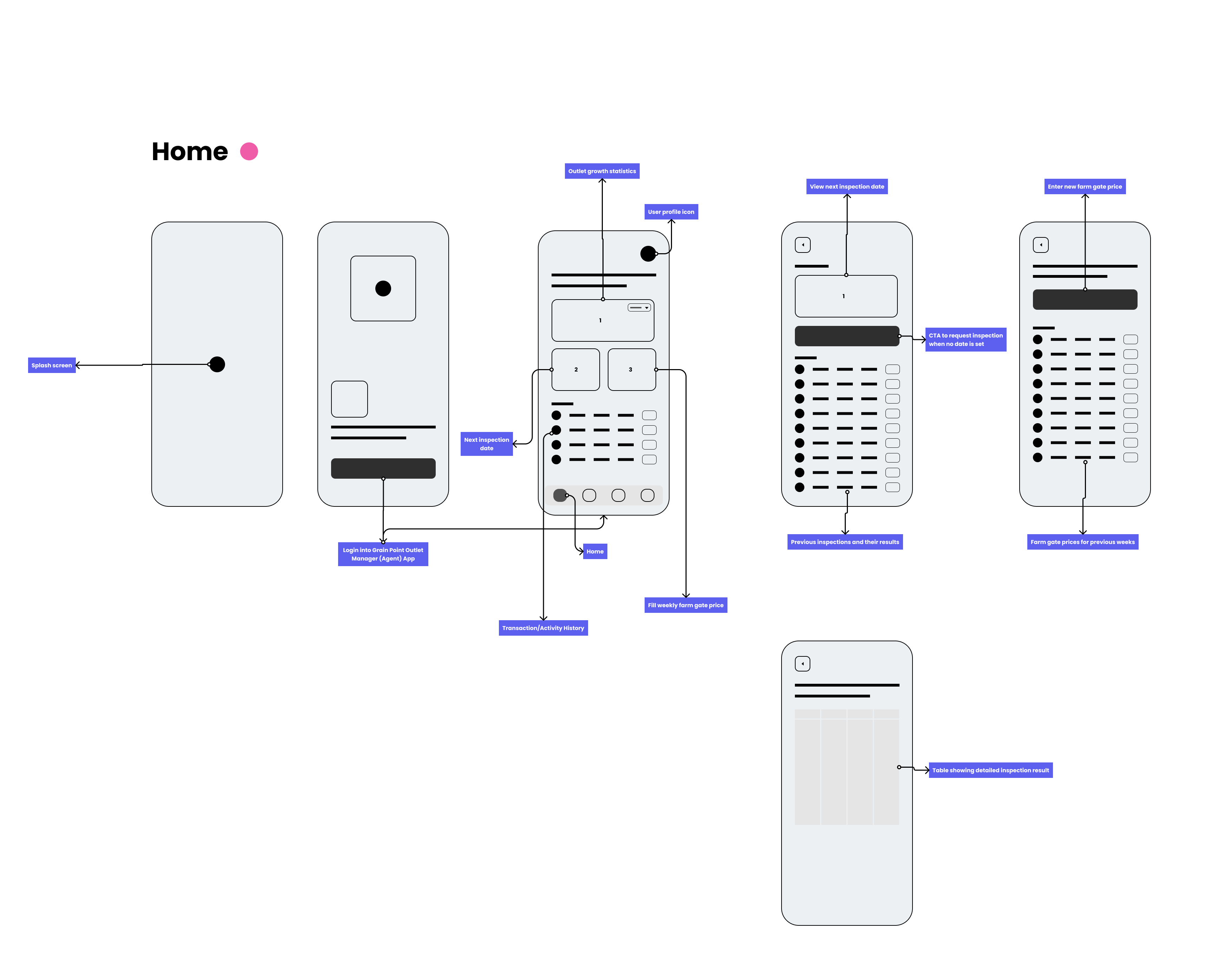
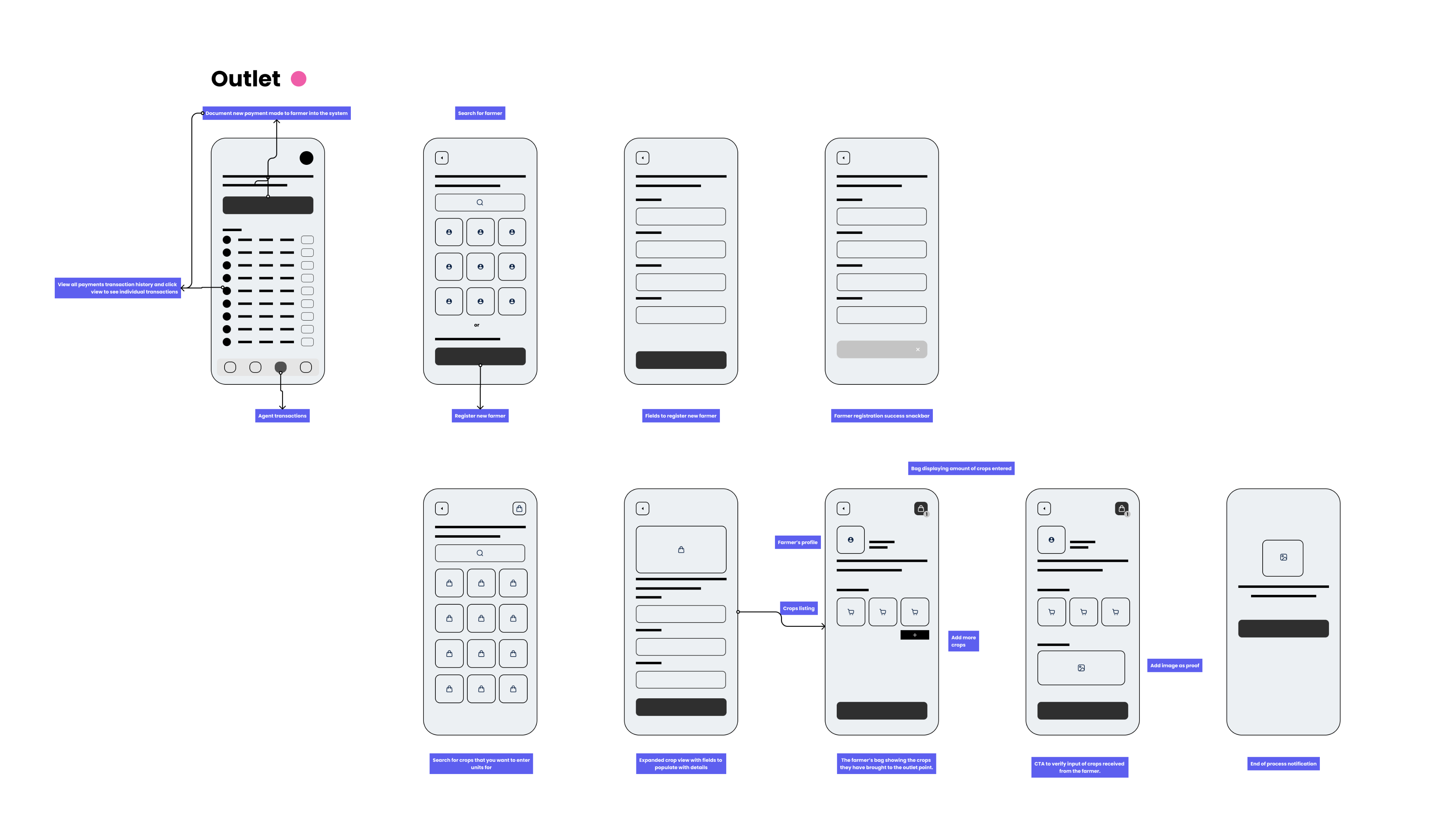
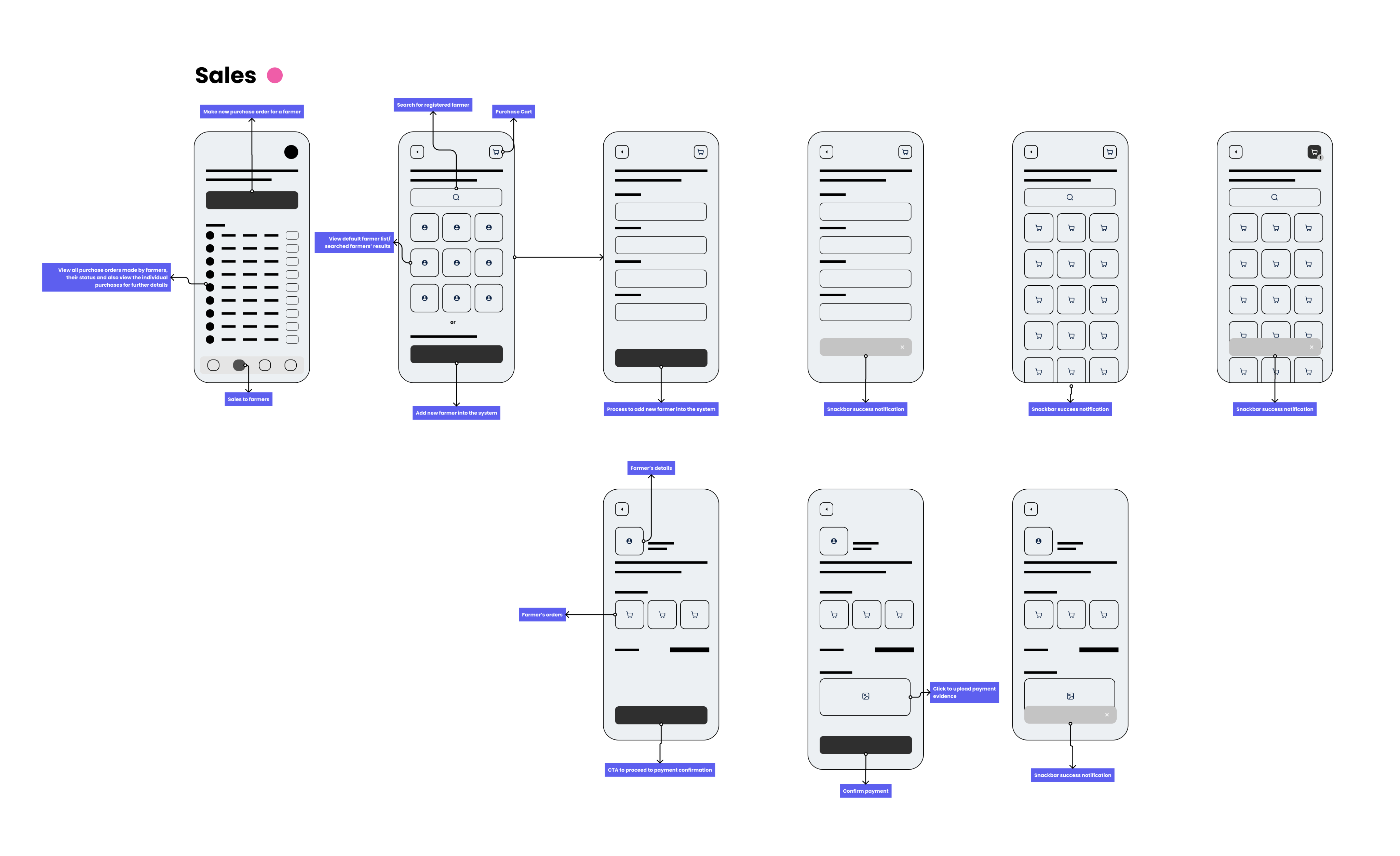
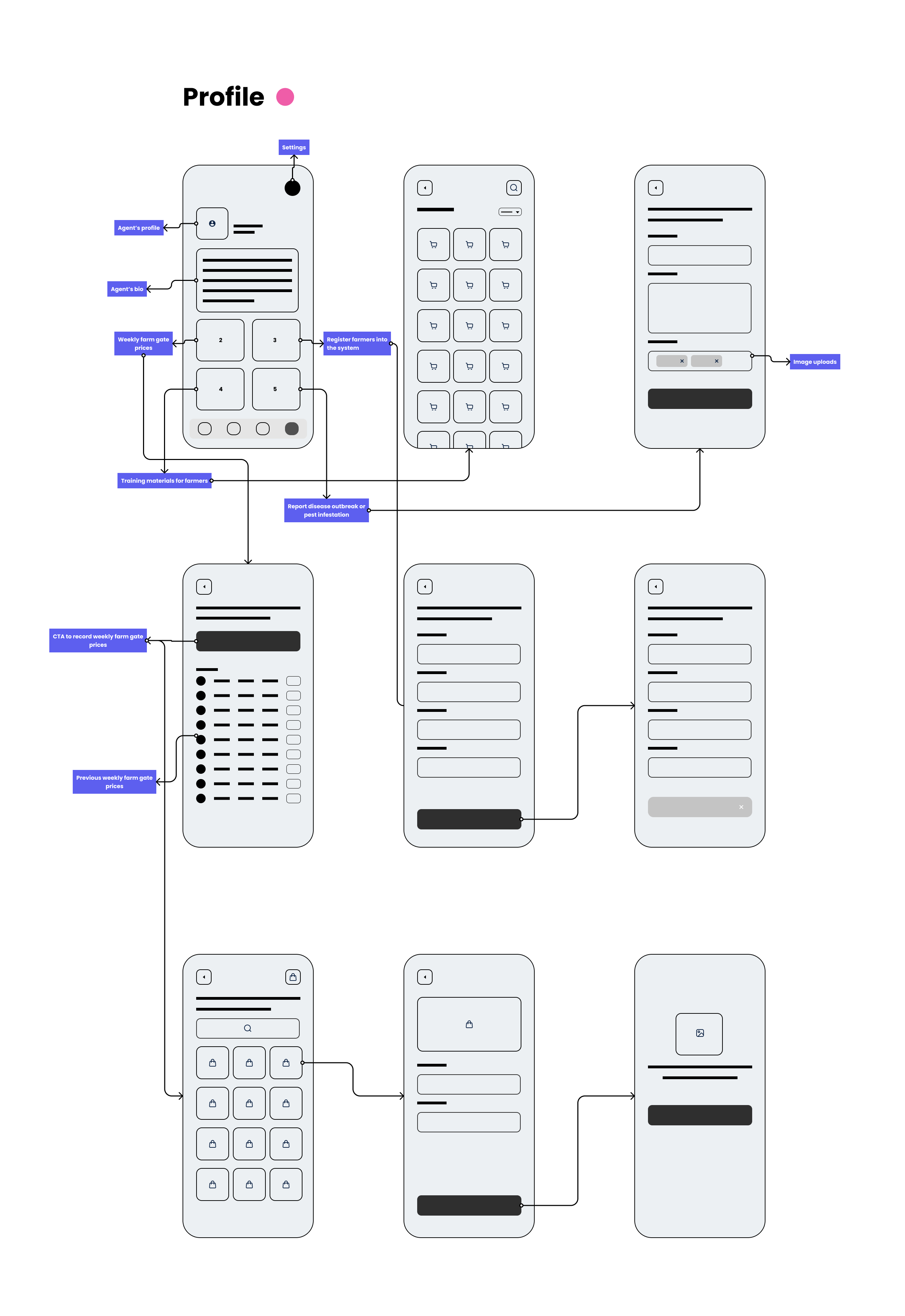
Mobile App’s Low-Fidelity Wireframes
User Flows & Information Architecture
Connecting the Field to the Boardroom
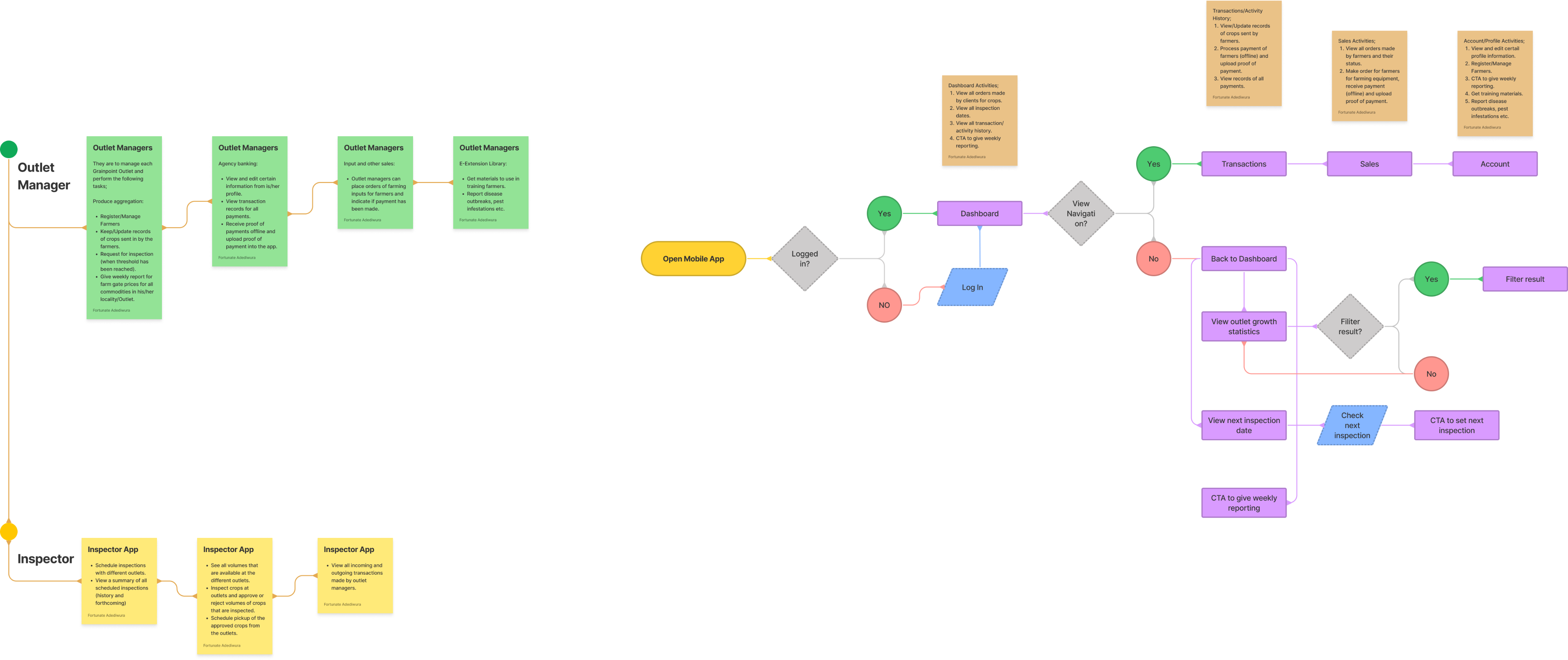
The challenge was creating a digital ecosystem that connected two very different worlds. I mapped out distinct paths for the people on the ground:
- For the Outlet Manager: I designed their flow to be the "Command Center." Their journey moves from registering a new farmer to logging a massive grain delivery, and finally, tracking the payout. It’s about turning physical chaos into organized digital data.
- For the Inspector: Their flow is the “Quality Gate". I structured it so they could easily select a farmer, physically inspect the grain, and input the data (Weight & Quality) without friction. If the grain doesn't pass, the system handles the rejection gracefully; if it does, it moves instantly to sales.
Visual Design & Key Features
Clarity Over Complexity
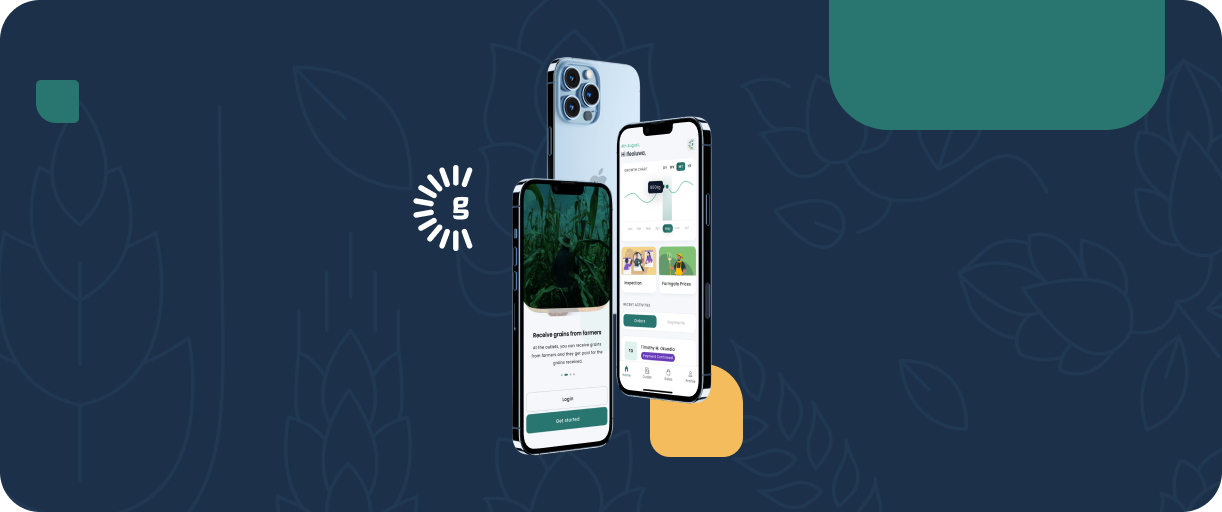
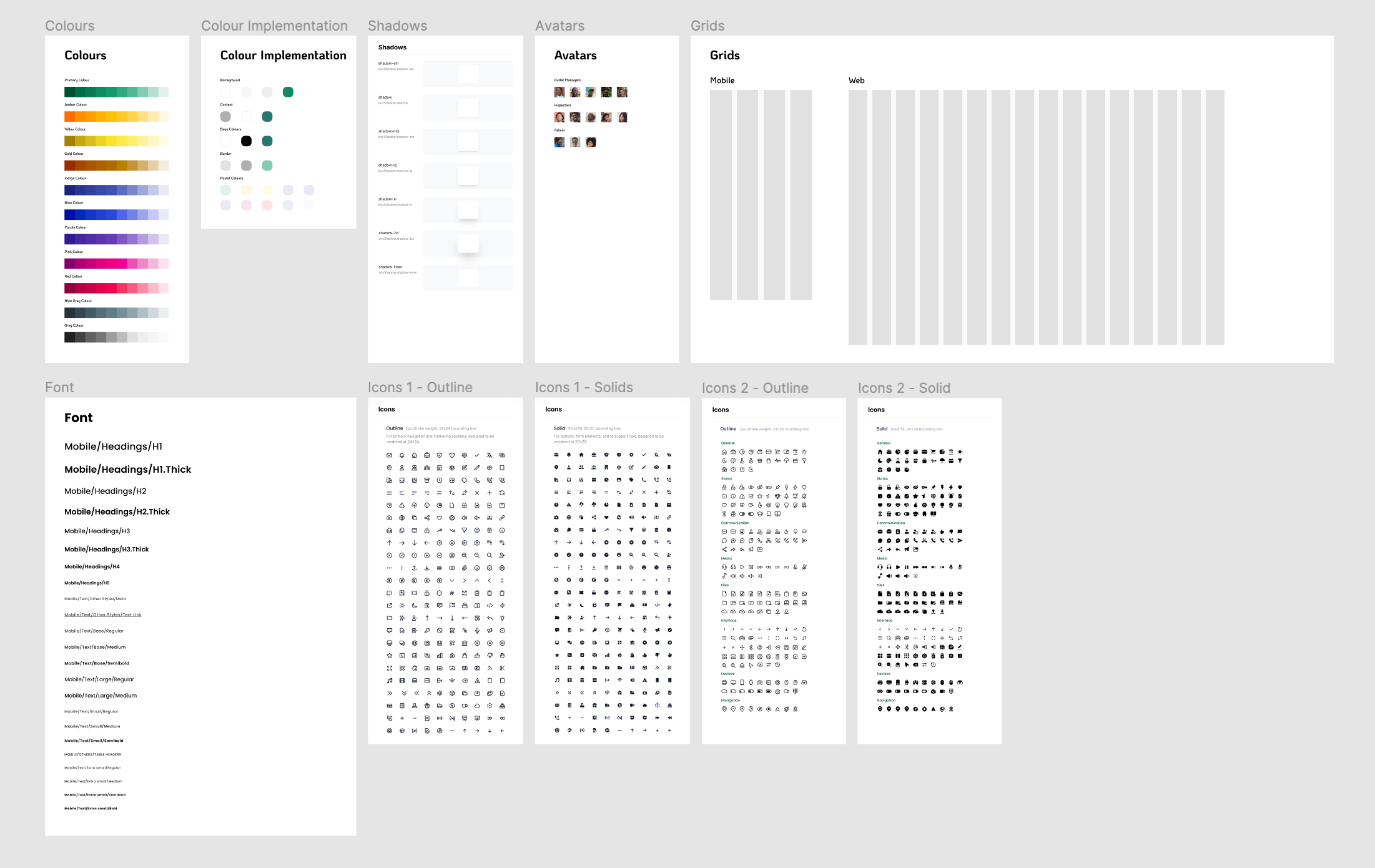
The visual design had to be approachable. I used a clean, data-rich interface that wouldn't intimidate users who might be using such advanced software for the first time.
The "Pulse" of the Outlet
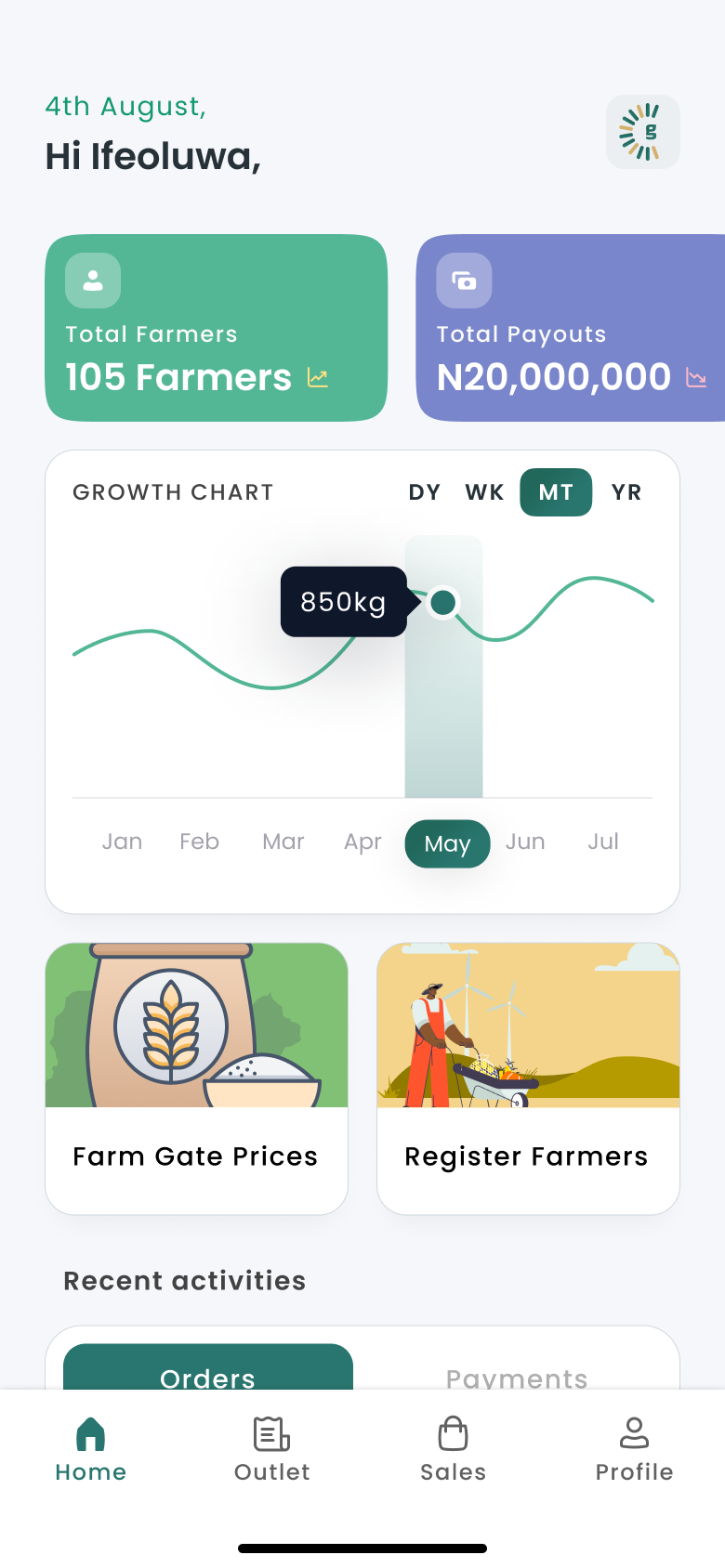
The Manager Dashboard is designed to answer the question: "How are we doing today?" instantly. I used prominent growth charts and graphs to visualize yield trends, helping managers feel in control of the volume.
Transparency in Inventory
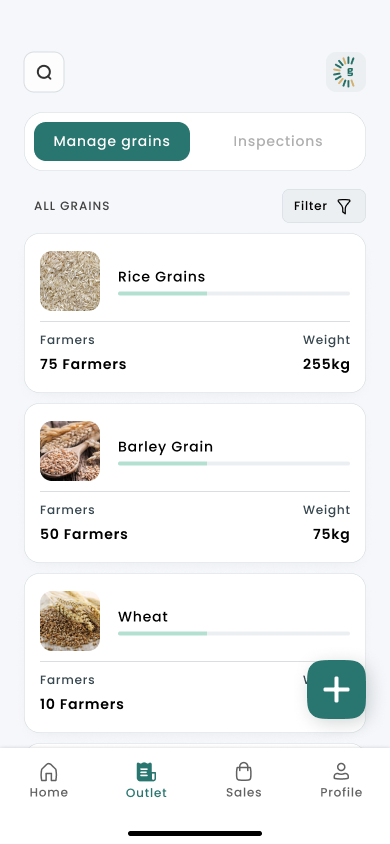
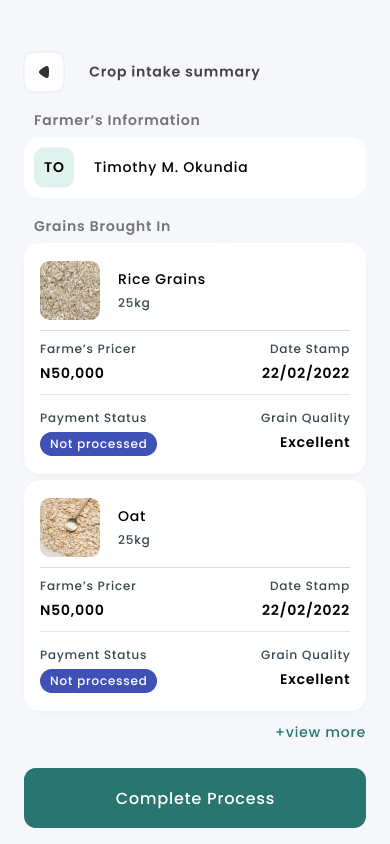
In the inventory screens, every batch of grain is detailed with its Weight (e.g., 255kg), Price, and Status. I added robust filtering so a manager can quickly find "Rice from 50 Farmers" or check a specific payment status.
Empowering the Inspector
The inspection screens are bold and binary. Clear "Approve" or "Reject" actions ensure that quality control is decisive, building the trust required for corporate partnerships.
Outcome
Impact Beyond the Screen
Grain Point is now live on the Google Play Store, but the real success isn't just the software launch—it's the livelihood it protects. By digitizing the heavy lifting of inspection and aggregation, we’ve created a system where a farmer can walk into an outlet, get their grain weighed fairly, and receive a transparent payment.
We didn't just build an app; we built a tool that ensures the people feeding our communities finally get a seat at the table.
Grain Point: Digital Transparency for Local Farmers
Bringing fairness and profit back to the local farmer
2022
Grain Point addresses a critical gap in the agricultural sector, the disconnect between hardworking local farmers and the corporate markets that need their produce. By replacing opaque middleman networks with a transparent digital ecosystem, this project streamlines the difficult journey from harvest to sale, ensuring that the true value of the crop goes directly back to the hands that cultivated it.
Role:
Product Designer
Responsibilities:
User Research, Userflow Design, Wireframing, High-Fidelity Design, Prototyping.
Goal:
To create a seamless ecosystem (Mobile Apps, Website, Dashboard) that assists farmers in selling quality grains directly to large corporations.
Overview
The Story
For many local farmers, harvest season brings as much anxiety as it does relief. Despite their hard work, they often find themselves at the mercy of a disjointed supply chain, relying on middlemen who obscure prices and erode their hard-earned profits. They produce the grain that feeds the nation, yet they often struggle to make a fair living because they lack direct access to the big corporate buyers (off-takers).
The Mission
I joined the team to build Grain Point, a platform designed to fix this broken link. Our goal was simple but ambitious: cut out the middlemen and give farmers a direct, transparent pipeline to sell their crops to major corporations.
The Process & Ideation
Designing for Reality
To make this work, I couldn't design in a vacuum. I had to understand the chaotic reality of a grain outlet. The people using this software aren't sitting in quiet offices; they are Outlet Managers handling hundreds of farmers and Inspectors making split-second decisions on grain quality.
I realized the design needed to solve four very human problems:
- Trust: Farmers need to know exactly what their crop weighed and what it’s worth, no hidden math.
- Speed: Managers are overwhelmed. The system needed to log "Crop Intake" instantly so they could move to the next farmer.
- Quality: Inspectors needed a rigorous but simple checklist to grade grains (Rice, Barley, Wheat) so corporate buyers would trust the product.
- Support: Farmers often need supplies before harvest. We added a feature to order inputs, supporting them throughout the entire season.
Mobile App’s Low-Fidelity Wireframes
User Flows & Information Architecture
Connecting the Field to the Boardroom
The challenge was creating a digital ecosystem that connected two very different worlds. I mapped out distinct paths for the people on the ground:
- For the Outlet Manager: I designed their flow to be the "Command Center." Their journey moves from registering a new farmer to logging a massive grain delivery, and finally, tracking the payout. It’s about turning physical chaos into organized digital data.
- For the Inspector: Their flow is the “Quality Gate". I structured it so they could easily select a farmer, physically inspect the grain, and input the data (Weight & Quality) without friction. If the grain doesn't pass, the system handles the rejection gracefully; if it does, it moves instantly to sales.
Visual Design & Key Features
Clarity Over Complexity
The visual design had to be approachable. I used a clean, data-rich interface that wouldn't intimidate users who might be using such advanced software for the first time.
The "Pulse" of the Outlet
The Manager Dashboard is designed to answer the question: "How are we doing today?" instantly. I used prominent growth charts and graphs to visualize yield trends, helping managers feel in control of the volume.
Transparency in Inventory
In the inventory screens, every batch of grain is detailed with its Weight (e.g., 255kg), Price, and Status. I added robust filtering so a manager can quickly find "Rice from 50 Farmers" or check a specific payment status.
Empowering the Inspector
The inspection screens are bold and binary. Clear "Approve" or "Reject" actions ensure that quality control is decisive, building the trust required for corporate partnerships.
Outcome
Impact Beyond the Screen
Grain Point is now live on the Google Play Store, but the real success isn't just the software launch—it's the livelihood it protects. By digitizing the heavy lifting of inspection and aggregation, we’ve created a system where a farmer can walk into an outlet, get their grain weighed fairly, and receive a transparent payment.
We didn't just build an app; we built a tool that ensures the people feeding our communities finally get a seat at the table.
Grain Point: Digital Transparency for Local Farmers
Bringing fairness and profit back to the local farmer
2022
Grain Point addresses a critical gap in the agricultural sector, the disconnect between hardworking local farmers and the corporate markets that need their produce. By replacing opaque middleman networks with a transparent digital ecosystem, this project streamlines the difficult journey from harvest to sale, ensuring that the true value of the crop goes directly back to the hands that cultivated it.
Role:
Product Designer
Responsibilities:
User Research, Userflow Design, Wireframing, High-Fidelity Design, Prototyping.
Goal:
To create a seamless ecosystem (Mobile Apps, Website, Dashboard) that assists farmers in selling quality grains directly to large corporations.
Overview
The Story
For many local farmers, harvest season brings as much anxiety as it does relief. Despite their hard work, they often find themselves at the mercy of a disjointed supply chain, relying on middlemen who obscure prices and erode their hard-earned profits. They produce the grain that feeds the nation, yet they often struggle to make a fair living because they lack direct access to the big corporate buyers (off-takers).
The Mission
I joined the team to build Grain Point, a platform designed to fix this broken link. Our goal was simple but ambitious: cut out the middlemen and give farmers a direct, transparent pipeline to sell their crops to major corporations.
The Process & Ideation
Designing for Reality
To make this work, I couldn't design in a vacuum. I had to understand the chaotic reality of a grain outlet. The people using this software aren't sitting in quiet offices; they are Outlet Managers handling hundreds of farmers and Inspectors making split-second decisions on grain quality.
I realized the design needed to solve four very human problems:
- Trust: Farmers need to know exactly what their crop weighed and what it’s worth, no hidden math.
- Speed: Managers are overwhelmed. The system needed to log "Crop Intake" instantly so they could move to the next farmer.
- Quality: Inspectors needed a rigorous but simple checklist to grade grains (Rice, Barley, Wheat) so corporate buyers would trust the product.
- Support: Farmers often need supplies before harvest. We added a feature to order inputs, supporting them throughout the entire season.
Mobile App’s Low-Fidelity Wireframes
User Flows & Information Architecture
Connecting the Field to the Boardroom
The challenge was creating a digital ecosystem that connected two very different worlds. I mapped out distinct paths for the people on the ground:
- For the Outlet Manager: I designed their flow to be the "Command Center." Their journey moves from registering a new farmer to logging a massive grain delivery, and finally, tracking the payout. It’s about turning physical chaos into organized digital data.
- For the Inspector: Their flow is the “Quality Gate". I structured it so they could easily select a farmer, physically inspect the grain, and input the data (Weight & Quality) without friction. If the grain doesn't pass, the system handles the rejection gracefully; if it does, it moves instantly to sales.
Visual Design & Key Features
Clarity Over Complexity
The visual design had to be approachable. I used a clean, data-rich interface that wouldn't intimidate users who might be using such advanced software for the first time.
The "Pulse" of the Outlet
The Manager Dashboard is designed to answer the question: "How are we doing today?" instantly. I used prominent growth charts and graphs to visualize yield trends, helping managers feel in control of the volume.
Transparency in Inventory
In the inventory screens, every batch of grain is detailed with its Weight (e.g., 255kg), Price, and Status. I added robust filtering so a manager can quickly find "Rice from 50 Farmers" or check a specific payment status.
Empowering the Inspector
The inspection screens are bold and binary. Clear "Approve" or "Reject" actions ensure that quality control is decisive, building the trust required for corporate partnerships.
Outcome
Impact Beyond the Screen
Grain Point is now live on the Google Play Store, but the real success isn't just the software launch—it's the livelihood it protects. By digitizing the heavy lifting of inspection and aggregation, we’ve created a system where a farmer can walk into an outlet, get their grain weighed fairly, and receive a transparent payment.
We didn't just build an app; we built a tool that ensures the people feeding our communities finally get a seat at the table.