Make starting a conversation feel possible.
Qiiper was built around a simple idea: some people need someone to listen, but do not know where to start. The product connected users with screened volunteer listeners, called empaths. Those listeners were not necessarily psychologists, so the experience was framed around emotional support rather than clinical care.
Turning the idea into a product structure.
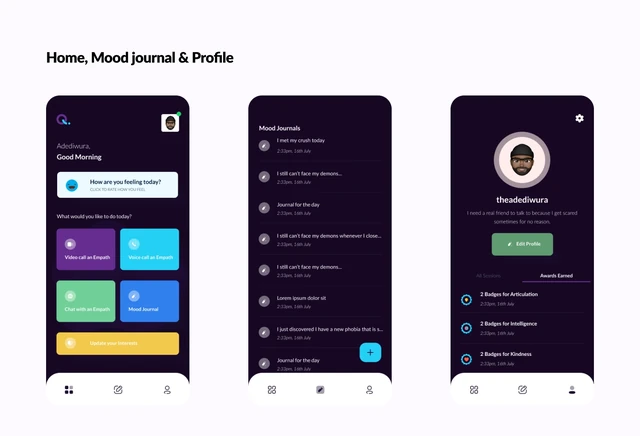
I worked as the Product Designer, organising the idea into two connected journeys: people seeking support and volunteers offering it. I designed the mobile experience and brand identity, including onboarding, matching, conversations, mood tracking and journaling.
Understand both sides of the conversation.
General users added context to their profile so the product could help connect them with listeners. Prospective empaths went through a separate onboarding and assessment flow. I made the two paths distinct because the information needed to seek support was different from the information needed to offer it.
Give people more than a call button.
Users could connect through chat, audio or video, set their mood for the day and write in a personal journal. I brought these into the home experience so a person could choose how to engage. The conversation flow also included an option to play a game together during an audio call.
What the work could—and could not—show.
The short timeline limited how much user testing I could carry out. I can explain the structure and design decisions, but the project does not establish an improvement in mental health or a measured adoption result.
If I revisited it, I would test the onboarding and matching flows with both users and listeners before drawing conclusions about how well they worked.